
Chapter 2. Network First
Bike lanes have failed in America because they’re not safe enough and they don’t connect.
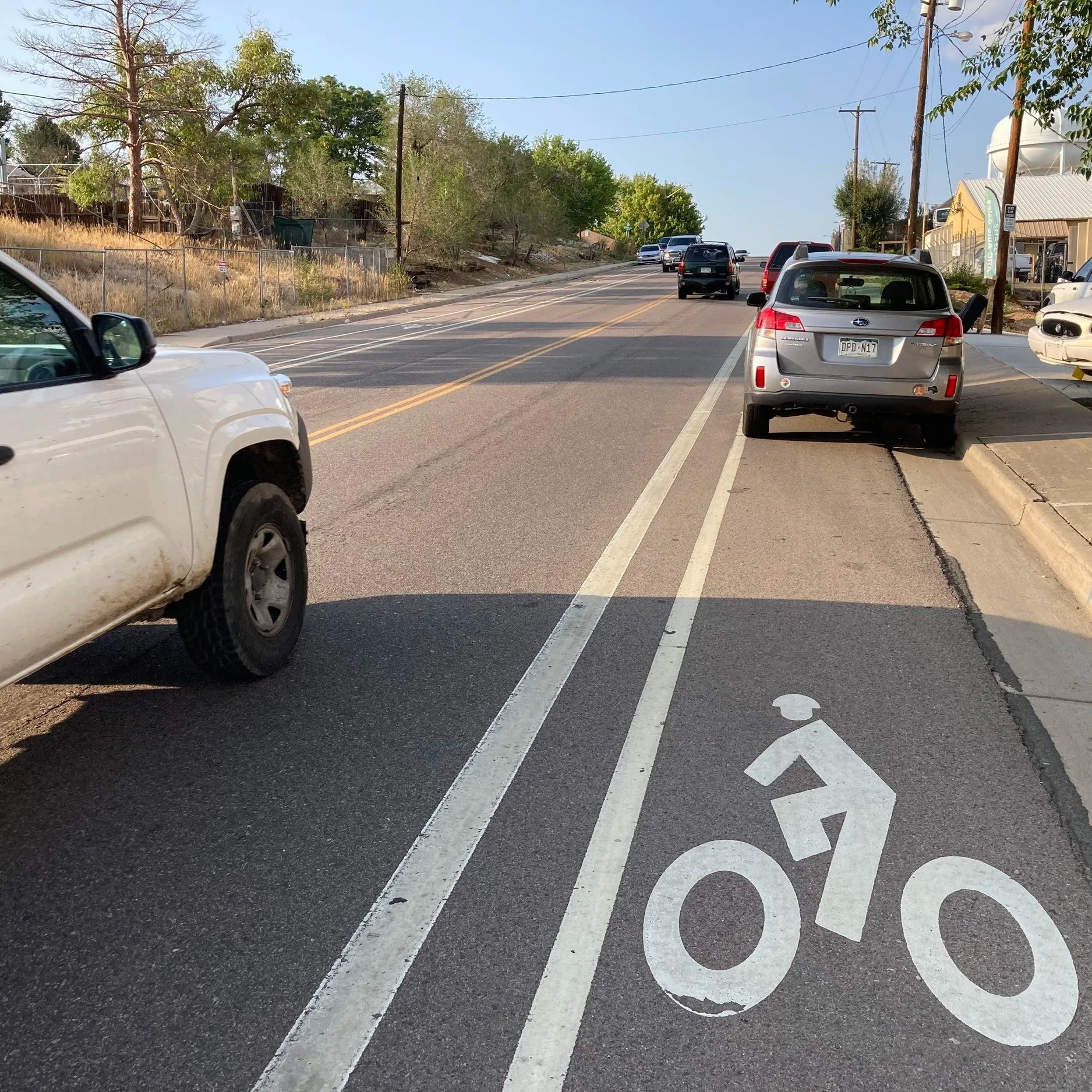
Narrow, frequently blocked bike lanes on high volume, high speed streets are a non-starter for most would-be riders.
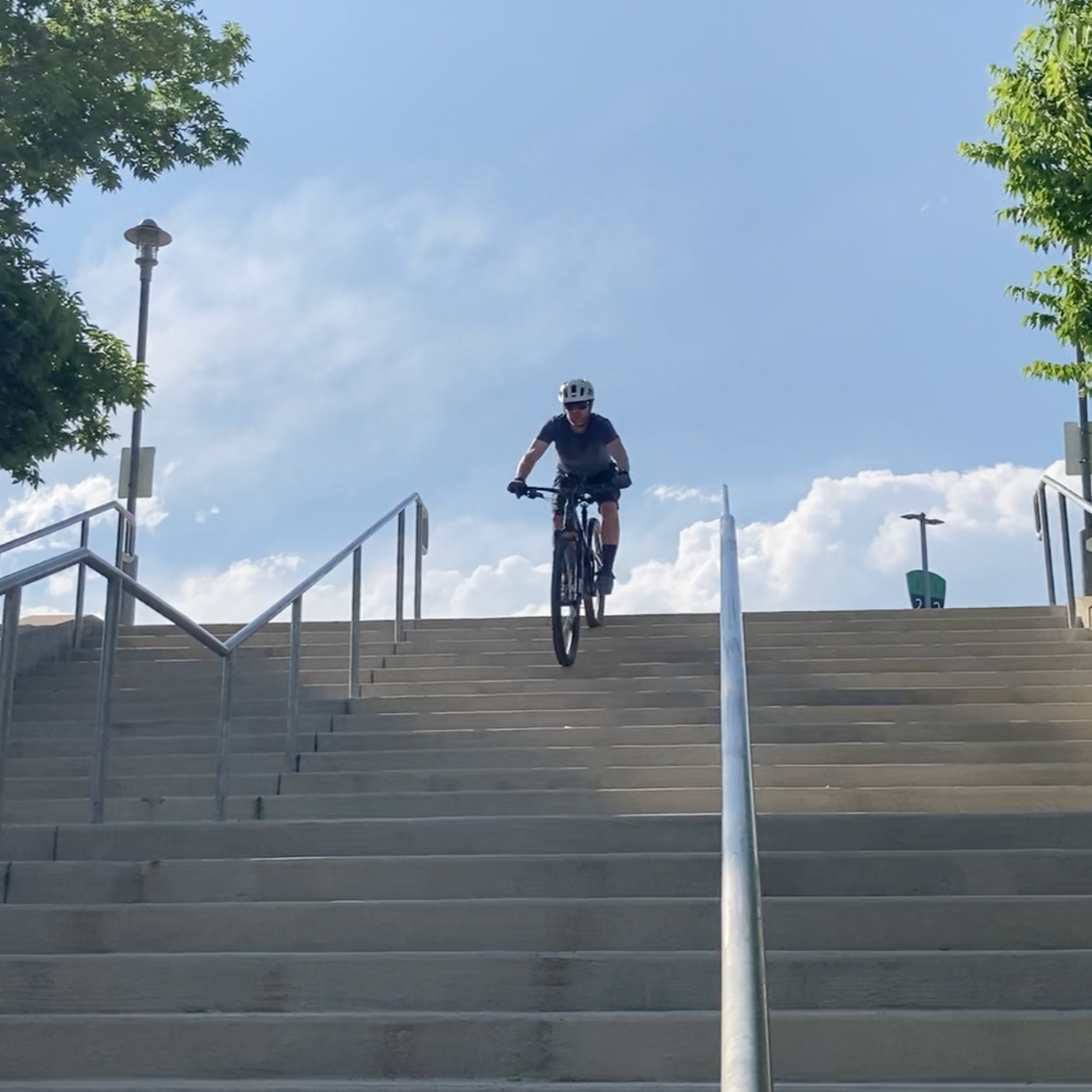
How’s this for a network connection? A mere 30 stairs on the official Denver bike map.
The solution, at least in the abstract, is simple: build safe, complete bike networks. And not just at some theoretical point in the future. Now.
Ezra Klein, the New York Times columnist and author of Abundance says it best “We should be able to deliver dramatic changes to public infrastructure quickly.”[18] We have to reject the assumption that a complete bike network is a 30-year, multi-generational project. Every bike master plan must have a realistic plan of attack that answers the question: How are we going to build this in the next few years?
Cities have developed a compelling case for a “Housing First” approach to homelessness. Get folks some stability under a roof and they can start to rebuild their lives.[19]
Bike transportation needs a similar “Network First” approach where connected networks are the top priority – not just in plans and PDFs, but an on-the-ground reality in 1-3 years. That Version 1.0 will not be the fully optimized network, but it’s a start that can make bike transportation possible for many more people.
Four requirements guide a Network First approach:[20]
Complete version 1.0 network in less than 3 years.
Usable by people of all ages and abilities.
Massive actual usage.
Constant improvement over time.
A meaningful time constraint forces us to be creative. It also acknowledges a tricky political reality: we need to deliver while we have a supportive city council and mayor.
The additional requirements are designed to ensure access and outcomes: crappy painted bike lanes on arterial streets won’t suffice. We can’t just build it and walk away without studying the outcomes — or lack thereof — that we created. Infrastructure is a means to an end.
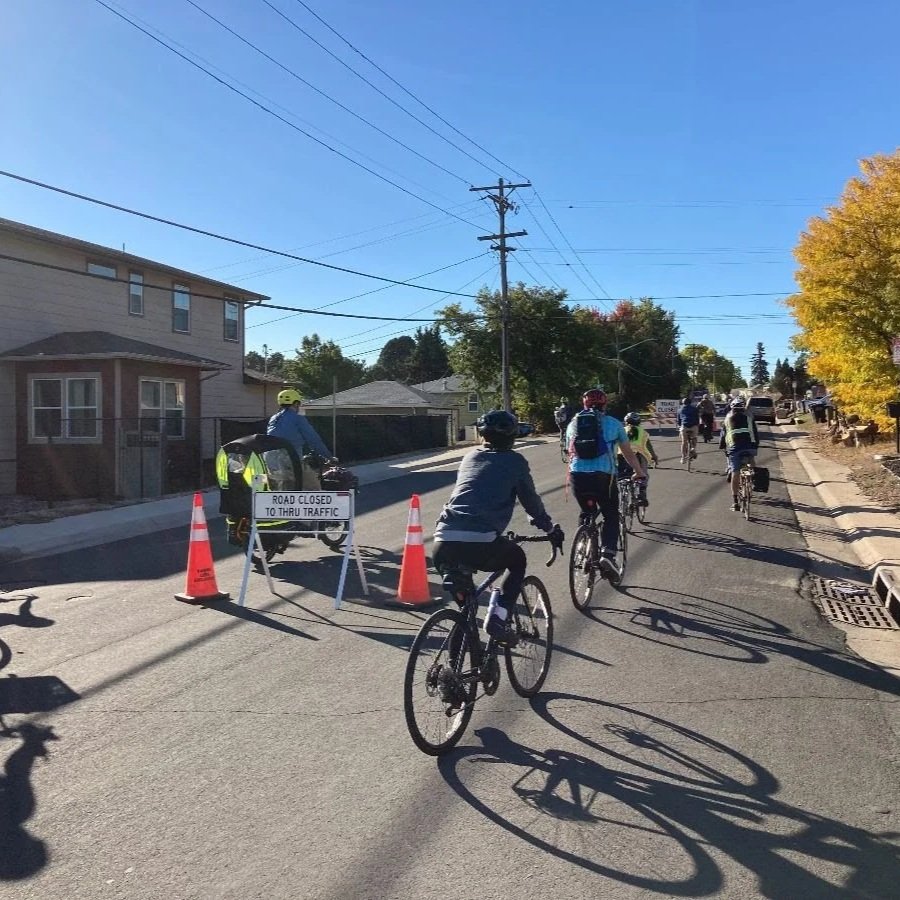
A de facto diverter and the picture we’re trying to create. Joyful streets filled with people going about their daily business.
The key place to start is with the recognition that every city has a high-comfort bike network hiding in plain sight. It’s probably not glamorous. There aren’t architecturally significant bridges or optimally engineered bike facilities like those that show up in the glossy PDFs cities create to show the vision of their future states.
But it’s a network that does the job for starters. It keeps people safe when they’re biking and makes it possible for them to get to the places they want to go. It’s the folk knowledge that locals have in their minds about how they navigate around town. It’s the set of routes that people on bikes are already using.
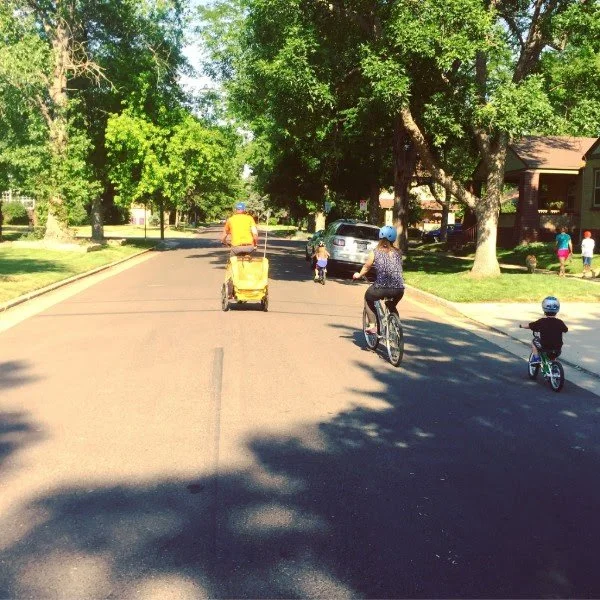
It’s the quiet residential streets, the hidden connector paths, and the park trails that people already ride.
We call this the “Best Available Network.”[21]
Best Available Networks, like the first one we mapped Denver and the subsequent ones we’ve mapped from Berkeley to Buffalo, show that it’s possible to create an initial network – today! – if we use every tool in the toolkit: trails, protected bike lanes, side streets, alleys, sidewalks, crosswalks, park trails, and so on.
Is it a perfect network? Not at first. But it’s vastly more accessible than painted bike lanes on arterial streets that end abruptly and spit you out in traffic. It’s a starting place. Over time we will prioritize and improve the weakest point locations to make it better and better.
The contrast between the status quo approach to creating bike infrastructure and a Network First approach could not be more stark.
| The Status Quo Approach | The Network First Approach |
|---|---|
| One bike lane at a time. Network maybe in the future. | Start with a complete network now. |
| Painted bike lanes on arterial streets are ok. | High-comfort facilities only. |
| Expensive, custom high-comfort facilities. | Low-cost, scalable high-comfort facilities. |
| Divisive public meetings. | Demonstration projects to build broad support. |
| Build it, then move on. | Build it, observe, and improve incrementally. |
| Huge expenditures of political capital. | Earn political capital. |
What’s critically different about the Network First approach is that we have a legitimate high-comfort network all along. A complete network isn’t just some theoretical future state; it’s today’s reality. People can ride today. We can build the bike movement now. And incremental improvements over time, make the network better and better.
This provides us with a glide path to all the expensive, custom features we imagine in the future. Rather than building Awesome Bridge A, Great Protected Bike Lane B, and New Trail C now and then figuring out how to connect them. We start with a complete network, get people riding, and then build A, B, and C.
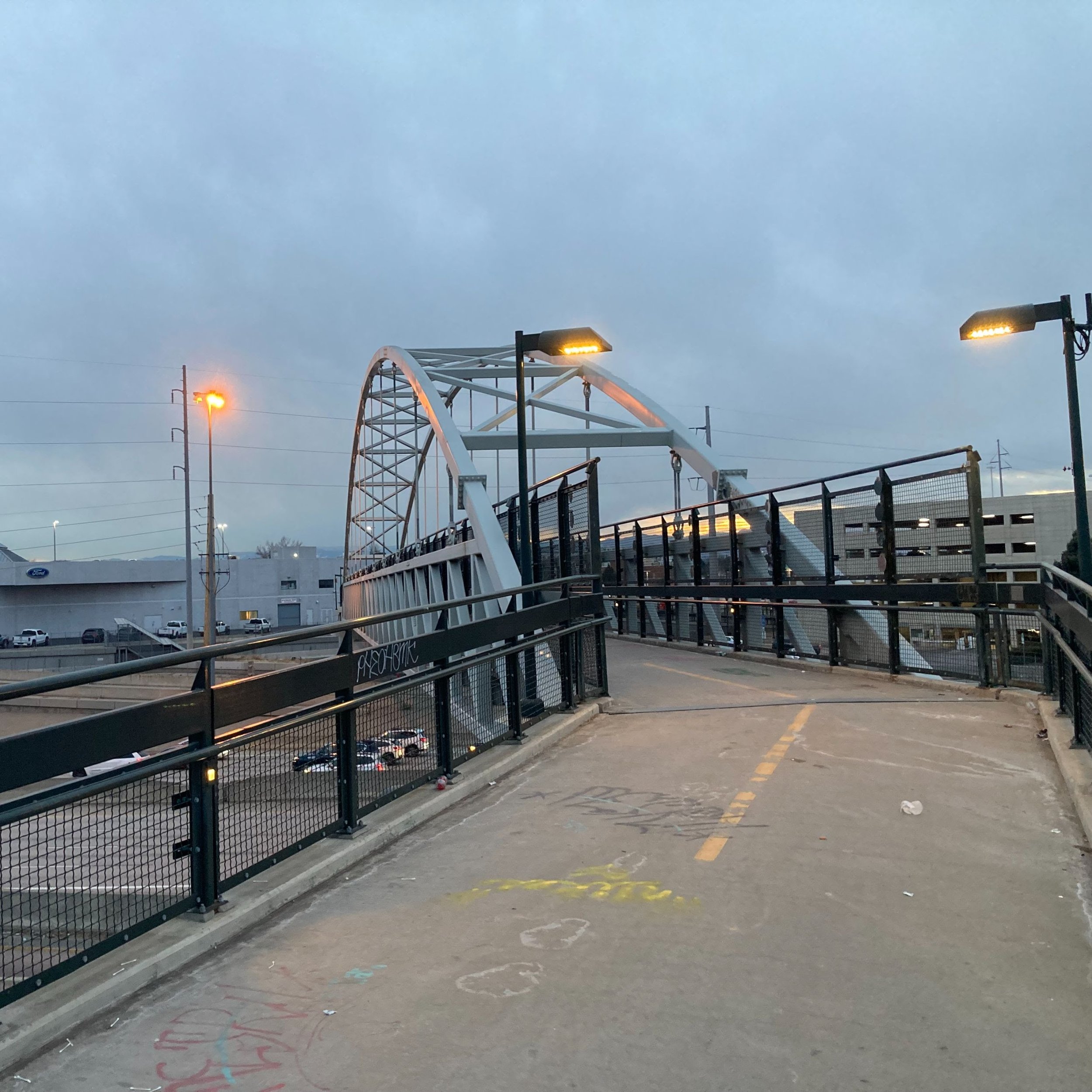
We all love a good bridge, but what’s a bridge without a network?
Moreover, with a complete network, we have the means to build the bike movement (i.e., usage) now, which should accelerate our ability to get more and more investment in the network. We seek a virtuous circle: a complete version 1.0 network gets more people to ride, more people riding gets cities to invest more, more investment and the normalization of bike transportation gets even more people riding, and so on.
References:
[18] https://www.nytimes.com/2025/09/18/opinion/interesting-times-ross-douthat-ezra-klein.html
[19] https://endhomelessness.org/resources/toolkits-and-training-materials/housing-first/
[20] https://www.bikestreets.com/blog/4-requirements
[21] https://bikestreets.com/blog/the-best-available-network